





Cover Story — April 1, 2026: Air Canada Express Flight 8646: Tested by Crisis, Defined by Response
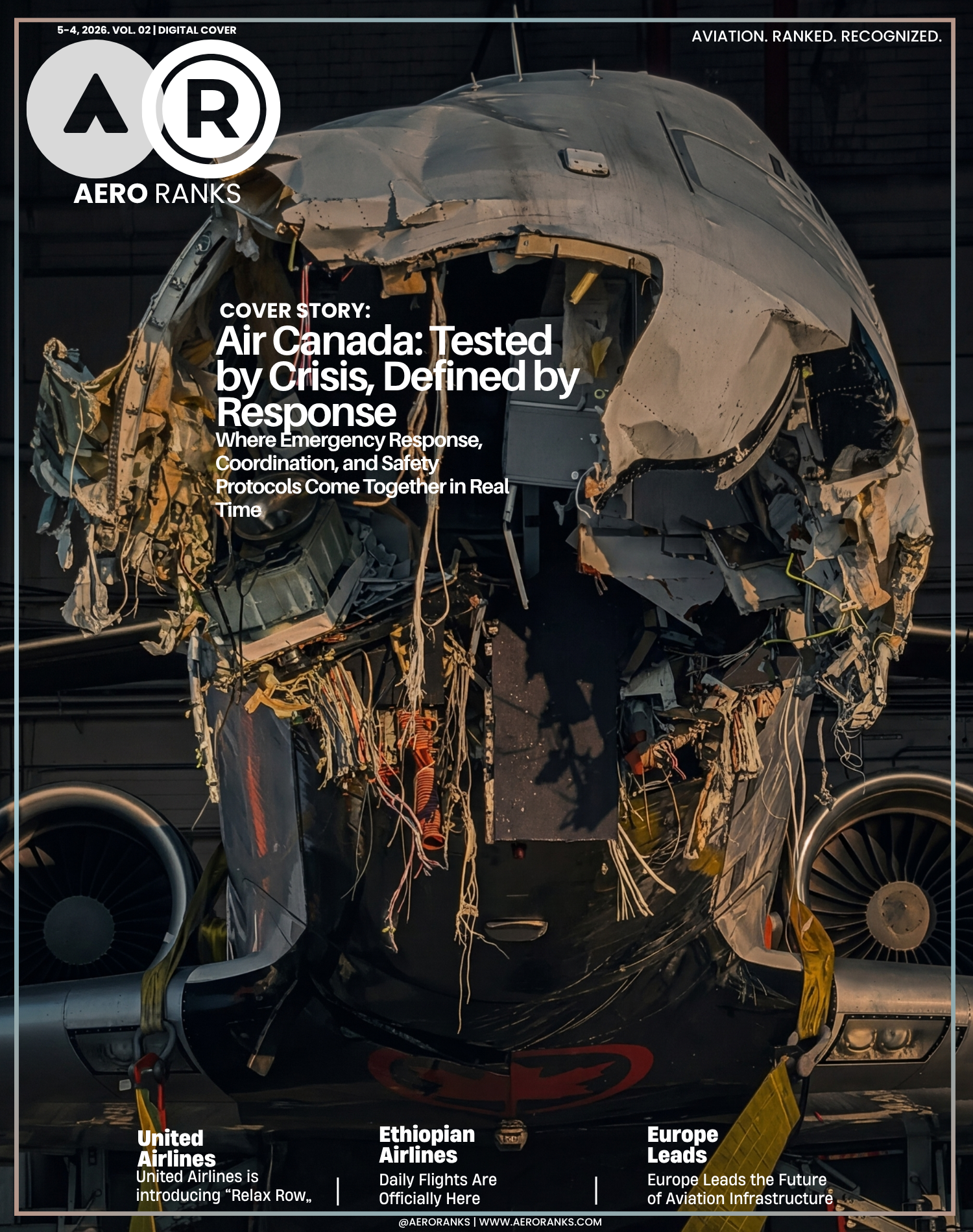
Tested by Crisis, Defined by Response A Closer Look at the Aftermath — Where Emergency Response, Coordination, and Safety Protocols Come Together in Real Time
On the night of March 22, 2026, Air Canada Express Flight 8646 — a Bombardier CRJ900 operated by Jazz Aviation — was on final approach to New York’s LaGuardia Airport (LGA) after departing from Montréal. What should have been a routine landing turned into tragedy in mere seconds. The aircraft collided with a Port Authority Aircraft Rescue and Firefighting (ARFF) truck crossing Runway 4, destroying the cockpit and forward galley. Both pilots tragically lost their lives. Forty-one people, including passengers, remaining crew, and the two firefighters in the truck, were hospitalized. Yet amid the devastation, the rapid and coordinated response that followed prevented an even greater loss of life.
This is the story of the aftermath — the critical minutes and hours where emergency protocols, multi-agency coordination, and on-the-ground execution determine outcomes.
The Collision and Immediate Aftermath
The incident unfolded around 11:30–11:45 p.m. local time. The CRJ900 touched down on Runway 4 while the ARFF truck — responding to an unrelated medical emergency on another aircraft — was crossing the active runway. Preliminary timelines show the aircraft was approximately 100 feet above the runway when clearance was issued to the truck. Despite urgent radio calls from the tower instructing the truck to stop, the vehicles collided at an estimated ground speed of 81–91 knots.
The impact was severe: the nose of the jet imploded, the fire truck overturned, and debris scattered across the tarmac. One flight attendant, secured in her jump seat, was ejected more than 300 feet from the wreckage but survived with serious injuries.
Within moments, the airport’s emergency plan activated. Additional ARFF units, New York City Fire Department (FDNY), NYPD, and medical teams rushed to the scene. Passengers and surviving crew were quickly evacuated from the damaged aircraft. First responders provided immediate triage, with 39 people transported to area hospitals for treatment of injuries ranging from fractures and lacerations to smoke inhalation and trauma.
Coordination in Action: The Strength of Pre-Planned Protocols
LaGuardia’s response highlighted both the strengths and complexities of modern airport emergency management:
- Unified Command: An Emergency Operations Centre was stood up almost immediately, coordinating the Port Authority of New York and New Jersey, FAA, NTSB, Air Canada/Jazz, local hospitals, and city agencies.
- Rapid Medical Evacuation: Dozens of ambulances and medical personnel were on scene within minutes, ensuring no passenger fatalities despite the high-impact collision.
- Runway and Airport Management: LaGuardia was temporarily closed, with incoming flights diverted and ground operations halted to preserve the accident site for investigators.
- Passenger Support: Air Canada quickly established a family assistance hotline and worked with local authorities to provide care, transportation, and counseling for the 72 passengers and surviving crew.
By the following day, LaGuardia had partially reopened, and most injured passengers had been released or were in stable condition. Only a small number remained hospitalized a week later.
Lessons Emerging from the Response
While the full NTSB investigation is ongoing (focusing on runway incursion procedures, communications, and human factors), early indicators point to the critical role of real-time coordination. Controllers attempted to halt the truck. First responders executed a textbook multi-agency response. The survival of all 72 passengers and the remaining crew, despite the destruction of the forward section of the aircraft, speaks to the effectiveness of modern aircraft design, evacuation procedures, and emergency readiness.
This incident serves as a stark reminder that aviation safety is not only about preventing accidents but also about how effectively systems respond when the unexpected occurs. Runway incursions remain a top global safety concern, and this event underscores the need for even tighter integration between air traffic control, airport operations, and ground services.
Why This Matters for Passenger Choice
In the African aviation context — where rapid growth brings increased traffic and infrastructure pressures — stories like Flight 8646 remind us why safety and emergency preparedness deserve a prominent place in consumer rankings. Passengers want more than affordable fares and convenient routes. They want confidence that airlines, airports, and regulators are equipped to protect lives when seconds matter most.
At AeroRanks, our upcoming Africa Passenger Choice Awards will recognize not only on-time performance and service excellence but also carriers and airports that demonstrate outstanding safety culture and emergency response capabilities.
The two pilots of Flight 8646 lost their lives protecting their passengers until the final moments. Their sacrifice, alongside the swift actions of first responders, defines this tragedy’s legacy: a system tested by crisis and ultimately defined by its response.
AeroRanks will continue to follow the NTSB investigation and its implications for global aviation safety.
What are your thoughts on how airports and airlines can strengthen runway safety protocols? Share below or cast your vote in our upcoming awards categories, including Safety & Emergency Response Excellence.
Stay informed. Prioritize safety. AeroRanks — Ranking Africa’s Skies with transparency and passenger voice.