



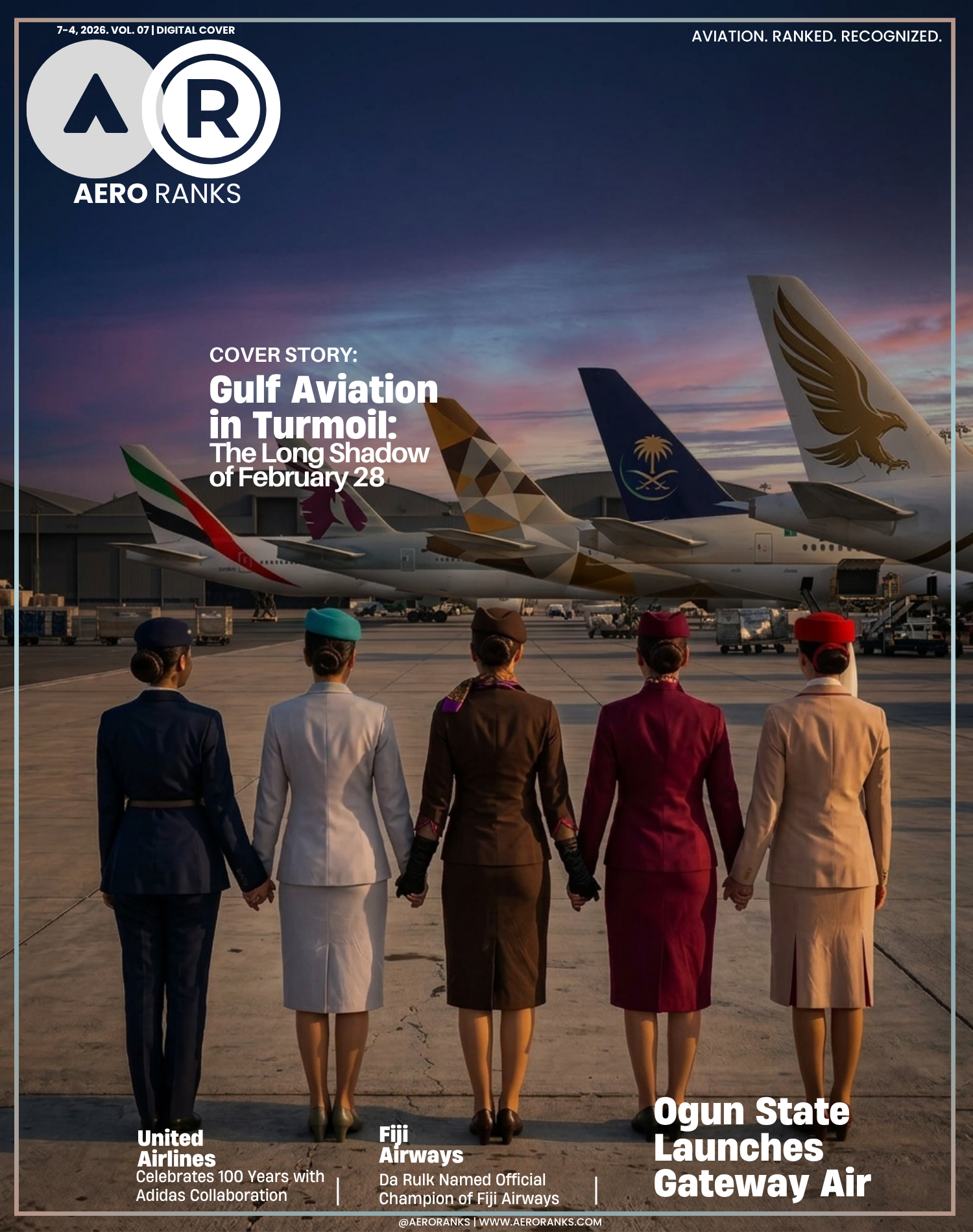
How the Ongoing Regional Crisis Is Reshaping the World’s Most Ambitious Aviation Powerhouse
Introduction: A System Under Pressure
Five weeks after the escalation that began on February 28, 2026, the once-glittering aviation empire of the Gulf is operating under intense pressure.
What was expected to be a record-breaking year for Emirates, Qatar Airways, and Etihad has instead become the most severe disruption to Middle East aviation since the COVID-19 pandemic.
Airspace closures, retaliatory tensions, fuel price shocks, and persistent safety concerns have forced the region’s flagship carriers and mega-hubs into a period of contraction and uncertainty.
The Trigger and Immediate Disruption
On February 28, 2026, U.S. and Israeli strikes on Iran triggered immediate and widespread airspace closures across the Gulf.
Iran, Iraq, Kuwait, Bahrain, Qatar, the UAE, and parts of Saudi Arabia either fully or partially restricted their airspace.
In the first week alone:
- 15,000 to 19,000 flights were cancelled
- 1.5 to 6 million passengers were disrupted globally
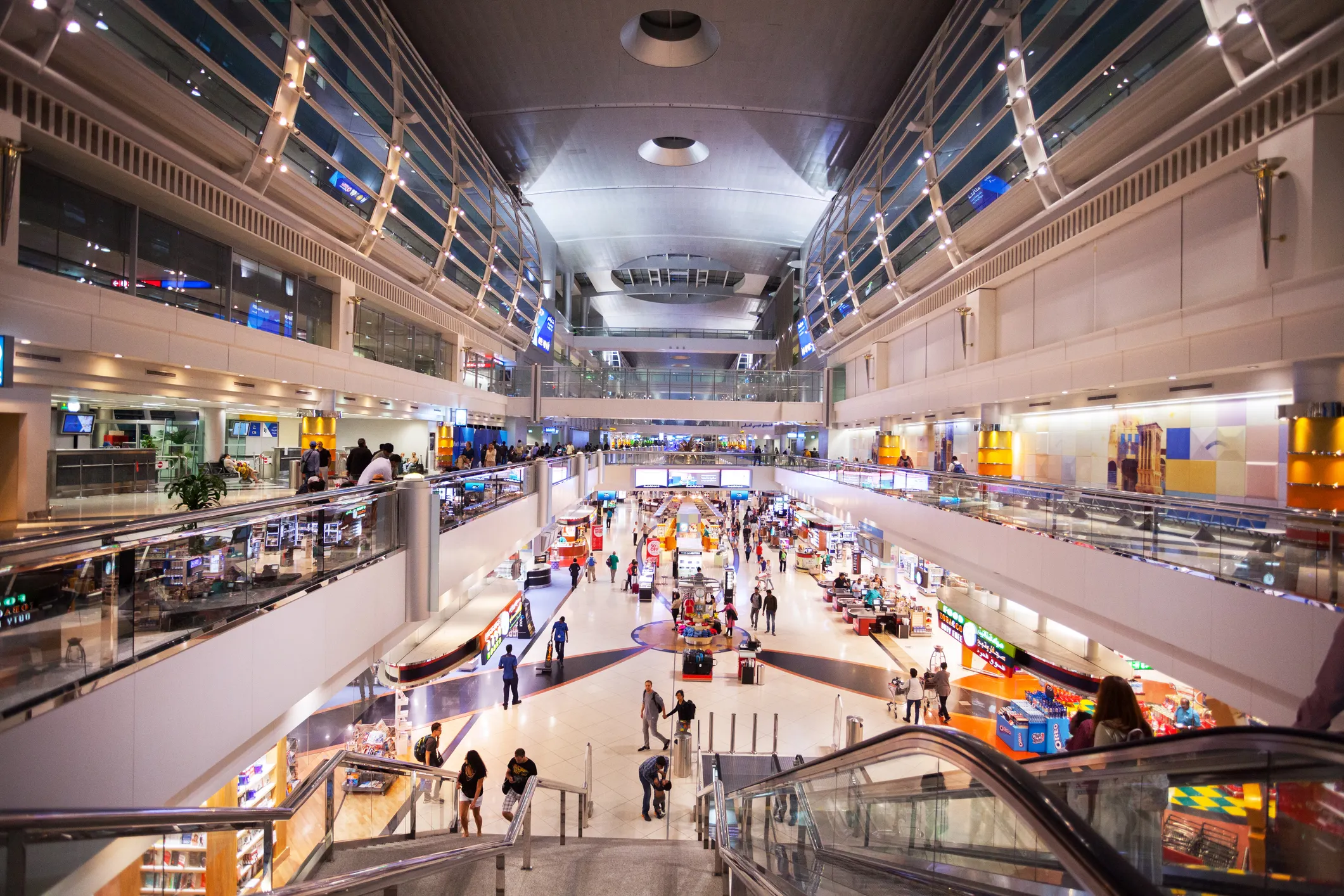
Dubai International (DXB), the world’s busiest international airport, saw a sharp drop in operations. Hamad International Airport in Doha and Zayed International Airport in Abu Dhabi experienced similar disruptions.
Among the region’s leading airlines:
- Qatar Airways operated at times at just 20 percent of pre-crisis capacity
- Emirates maintained approximately 70 to 75 percent
- Etihad Airways hovered around 50 percent
Low-cost carriers such as flydubai and Air Arabia were also significantly affected.
Passengers reported widespread disruption, including overcrowded terminals, sudden cancellations, extended rerouting through Africa and Turkey, and delays in repatriation flights.
The Human and Economic Impact
Fuel prices surged by up to 78 percent in the initial weeks, significantly increasing operating costs and forcing airlines to raise fares on limited available routes.
Global carriers, including major European airlines, suspended or rerouted flights away from the Gulf corridor, one of the most critical links between Europe, Asia, and Africa.
Tourism losses across the UAE, Qatar, and Saudi Arabia quickly reached billions of dollars.
Combined, Emirates, Qatar Airways, and Etihad saw daily passenger volumes fall drastically from nearly 90,000 passengers to a fraction of that figure during the peak of the disruption.
Current Reality — April 2026
Operations have partially stabilized but remain volatile.
- Emirates is operating at approximately 70 to 75 percent capacity, with adjusted schedules and longer flight paths
- Qatar Airways remains heavily constrained at around 20 percent due to ongoing airspace restrictions
- Etihad Airways is focusing on essential routes and repatriation services
- Major hubs in Dubai, Doha, and Abu Dhabi remain open but are operating below normal capacity
Temporary disruptions continue due to security concerns, drone threats, and navigation interference.
Many international airlines are still limiting or avoiding routes through the region, with some cancellations extended into May and beyond.
What This Means for the Future of Gulf Aviation
The Gulf aviation model, built on seamless global connectivity, premium service, and strategic geographic positioning, is now facing one of its toughest tests.
If the situation persists, industry experts warn of:
- Long-term shifts in global traffic flows away from Gulf hubs
- Increased investment in alternative routes and partnerships
- Greater focus on operational resilience and contingency planning
For passengers, the reality has changed.
Flexibility, constant monitoring of flight status, and readiness for last-minute adjustments have become essential.
AeroRanks Insight
This crisis highlights a deeper shift in global aviation.
Airlines are no longer operating in predictable environments.
They are navigating a landscape defined by geopolitical risk, operational uncertainty, and rapid change.
The ability to respond, adapt, and maintain trust is now as important as scale and service quality.
Final Word
The Gulf aviation system has been tested before and has historically demonstrated resilience.
From global crises to pandemic recovery, the region’s carriers have consistently rebuilt and expanded.
The question now is not whether they can recover, but how quickly they can adapt to a new and more complex reality.
🌍 AeroRanks Conclusion
The Gulf’s position as the world’s aviation crossroads is being challenged, but not yet lost.
What happens next will define not just the region’s future, but the structure of global air travel itself.
If you want next, I can:
- Add cover headlines + badge text (Forbes/TIME style)
- Create visual direction for magazine cover
- Turn this into Instagram carousel + reel script
- Add Africa angle (huge opportunity story)
Just tell me 👍